

Why Eco-Labels Matter
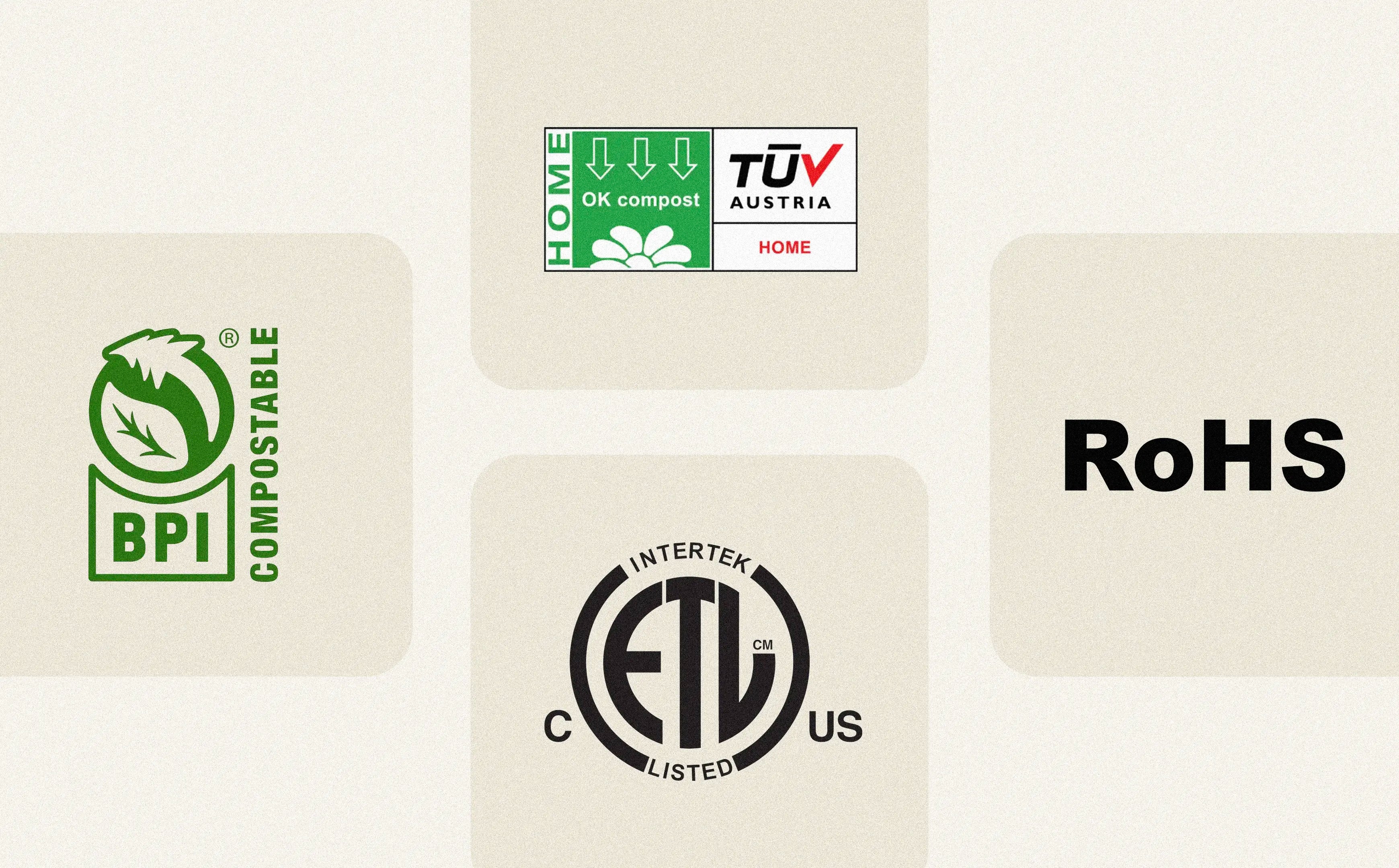
If you’ve ever flipped over a compostable bag or eco-friendly product and noticed tiny logos like BPI, TÜV Austria, or OK Compost, you’ve already met the world of eco-labels.
These small symbols carry big meaning — they tell you how responsibly a product was made, tested, and verified. But understanding what they stand for can be tricky.
At Owlpack, we believe sustainability should be simple and transparent. So here’s a quick guide to help you decode the most common certifications you’ll find on compostable packaging and what they actually mean.
1. BPI Certified Compostable (North America)
What it means:
The Biodegradable Products Institute (BPI) is one of the most recognized certifiers for compostable products in North America.
When you see the BPI logo, it means the product has been independently tested and proven to:
-
Fully break down in commercial composting facilities
-
Leave no toxic residue or microplastics
-
Meet strict standards under ASTM D6400 or D6868
Why it matters:
A BPI label assures that what looks compostable truly is. It’s your guarantee that the product won’t contaminate compost streams or landfill systems.
2. TÜV Austria Certifications (Europe and Global)
What it means:
TÜV Austria offers several certification marks, each focused on different composting environments:
-
OK Compost INDUSTRIAL:
Product will break down completely in industrial composting facilities at higher temperatures. -
OK Compost HOME:
Product decomposes in a home compost bin under lower, natural conditions. -
OK Biobased:
Indicates that a product is made partly or entirely from renewable plant-based materials rather than fossil fuels.
Why it matters:
TÜV certifications are trusted globally and make it clear where and how a product will safely decompose.
3. EN 13432 (European Standard)
What it means:
This is the European Union’s standard for compostable packaging. Products that meet EN 13432 must:
-
Disintegrate within 12 weeks
-
Biodegrade within 6 months
-
Contain no heavy metals or harmful residues
Why it matters:
It’s essentially the European version of ASTM D6400 — ensuring international consistency in compostability standards.
4. ASTM D6400 & D6868 (U.S. Compostability Standards)
What they mean:
Developed by the American Society for Testing and Materials, these standards define what counts as compostable plastic in the U.S.:
-
ASTM D6400: For compostable plastics (like bags and films).
-
ASTM D6868: For coated materials (like cups or paper lined with compostable films).
Why it matters:
Products meeting these standards are safe for commercial composting and align with the criteria behind BPI certification.
5. Other Labels to Know
-
USDA BioPreferred®: Identifies products made with a verified percentage of renewable biological materials.
-
Green Seal®: Focuses on environmental responsibility across the entire life cycle — not just compostability.
-
EcoCert®: Confirms that raw materials and production methods meet organic and environmental standards.
Each of these adds an extra layer of confidence that a product has been thoughtfully designed with the planet in mind.
How to Read Them Together
Eco-labels often appear side by side, and that’s a good thing — it means the product has passed multiple layers of scrutiny.
For example, an Owlpack compostable bag might carry:
-
BPI (for U.S. compostability)
-
TÜV OK Compost HOME (for home composting)
-
OK Biobased (for renewable materials)
Together, they tell you:
✅ It breaks down naturally
✅ It’s safe in both home and industrial composting
✅ It’s made from plants, not plastic
🌱 The Sustainable Takeaway
Eco-labels aren’t just marketing badges — they’re proof of accountability.
When you recognize what each one stands for, you can make confident, informed choices that align with your values.
So the next time you see those little logos on your Owlpack packaging, you’ll know exactly what they mean:
certified quality, true compostability, and real care for the planet.
Share:
Warm vs. Cool LEDs: Choosing the Right Tone for Cozy Evenings
Battery vs. Plug-In Lamps: Environmental Impact Comparison