

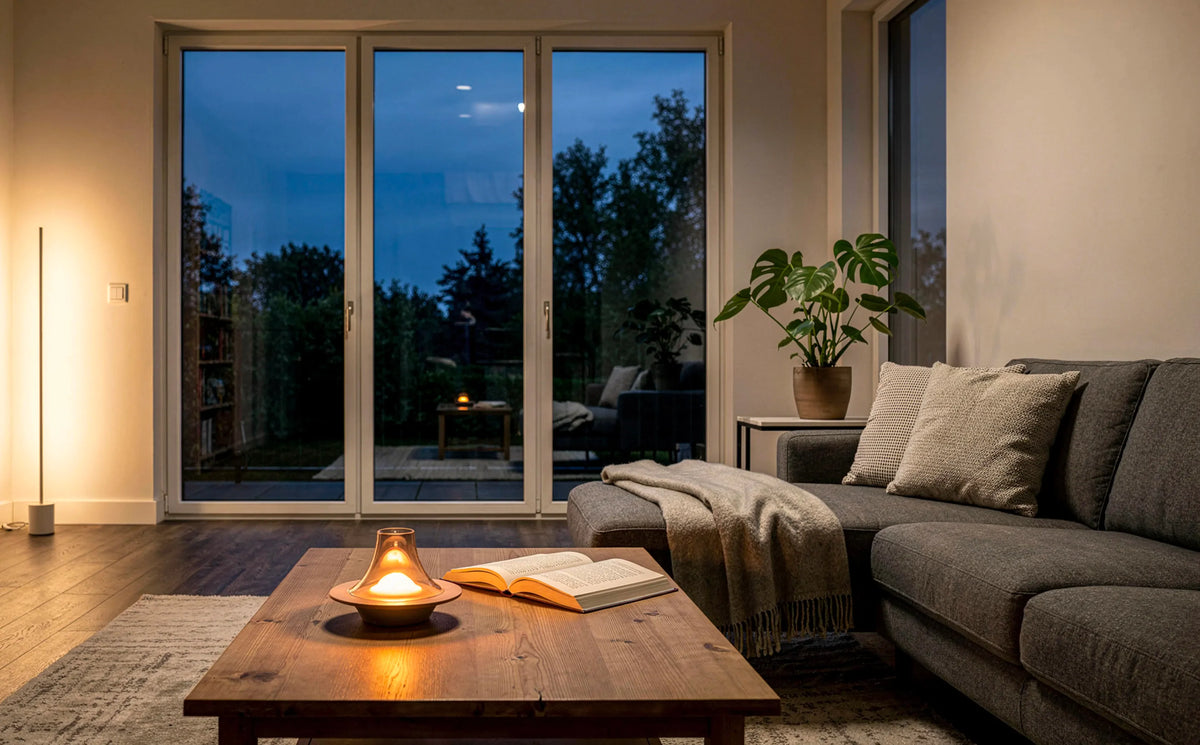
When the clocks change, your home can suddenly feel different—even though nothing inside it has moved.
The sun begins setting earlier according to the clock, afternoon daylight disappears sooner, and activities that previously happened in natural light now require artificial lighting. Working, preparing dinner, reading, and relaxing may all take place after dark.
In most of the United States, daylight saving time ends on the first Sunday of November. Instead of compensating with one bright overhead fixture, use the transition as an opportunity to reset your home with softer, more intentional layers of light.
Owlpack’s cordless lamps make this adjustment easier because they can move with your routine, without depending on outlet locations or permanent installation.
Why Your Current Lighting May Stop Working
A lighting arrangement that felt comfortable during summer may feel inadequate once evenings become darker.
You may notice:
-
Dark corners appearing earlier
-
Strong contrast between windows and interior spaces
-
More reflections on computer screens
-
Harsh overhead lighting during dinner
-
Entryways or hallways that feel underlit
-
Bright light lingering too close to bedtime
The solution is not necessarily to add more light everywhere. Effective lighting matches the activity, the time of day, and the part of the room being used.
Start with a Room-by-Room Evening Check
On the first darker evening, walk through your home around the time you normally finish work or prepare dinner.
Look for areas where you:
-
Struggle to see a task clearly
-
Switch on an overly bright ceiling light
-
Encounter shadows on steps or walkways
-
Notice reflections on screens
-
Move between very bright and very dark spaces
-
Need light but do not have a convenient outlet
These are the areas that will benefit most from a portable lamp.
Entryway: Create a Welcoming Transition
The entryway is one of the first spaces affected by earlier darkness. It should provide enough visibility for keys, bags, shoes, and safe movement without feeling overly bright.
Place a cordless lamp on an entry console, shelf, or stable surface near the door. Keep it away from the edge and outside the walking path.
Owlpack recommendation: Moovit
Moovit’s concealed LED and matte diffuser create soft, glare-free illumination without an exposed bulb. Its three brightness levels allow you to use brighter light during arrivals and a lower setting as an ambient evening glow.
Because it is cordless, Moovit can illuminate an entryway even when an outlet is unavailable or inconveniently placed.
Living Room: Build Layers Instead of Using One Ceiling Light
As daylight fades, a single overhead fixture can make a living room feel flat or harsh. A more comfortable setup combines several smaller pools of light at different heights.
Try using:
-
A task lamp beside a reading chair
-
A low accent light on a shelf
-
A lamp on a console behind the sofa
-
A portable floor lamp in a dark corner
-
A soft background light near the television
This creates enough illumination for different activities while allowing the room to retain a calm evening atmosphere.
Owlpack recommendation: Moovit or Pinot Floor
Use Moovit beside a chair for reading or focused activities. Its diffused 3000K light and adjustable brightness help illuminate the task without overpowering the room.
For a darker corner or larger seating area, Pinot Floor provides the presence of a traditional floor lamp without requiring placement beside an outlet. Its cordless format allows the room layout—not the electrical wiring—to determine where light is needed.
Home Office: Replace Lost Daylight with Focused Task Light
A desk that receives comfortable afternoon sunlight may become noticeably darker after the clock change. Instead of increasing all the room’s lighting, place focused light directly where you work.
Position the lamp so it illuminates documents, the keyboard, or the desk surface without reflecting on the monitor. Place the screen perpendicular to windows when possible and avoid positioning a visible light source directly behind it.
Owlpack recommendation: Merlot
Merlot is particularly useful in workspaces because it offers three color temperatures:
-
3000K warm yellow for calmer evening work
-
4000K natural white for reading and everyday tasks
-
5000K cool white when greater visual clarity is needed
Its mouth-blown opal glass shade diffuses the light, while adjustable brightness gives you more control as the room changes from afternoon to evening.
When work is finished, switch from a cooler or neutral setting to warm 3000K light. The same lamp can support productivity earlier and a more relaxed atmosphere later.
Kitchen: Light the Activity, Not the Entire Room
Earlier darkness often means preparing dinner under artificial light. Overhead fixtures may illuminate the room but still leave shadows on counters and food-preparation areas.
Use focused lighting near:
-
A chopping or preparation area
-
A coffee station
-
A recipe or cookbook
-
A countertop used for serving
-
A kitchen island during casual meals
A portable lamp should remain clear of water, heat, and food-preparation hazards.
Owlpack recommendation: Moovit
Moovit can provide diffused task lighting on a kitchen counter or island without introducing another cable into a busy workspace. Its stable base and three brightness levels make it easy to adjust between preparation, serving, and cleanup.
Dining Area: Shift from Visibility to Atmosphere
At dinnertime, the goal is to see food and faces comfortably without placing guests beneath harsh overhead light.
Lower the ceiling light if possible, then introduce softer illumination around the dining area. Lamps can be placed on a buffet, sideboard, beverage station, console, or at the ends of a long table.
Owlpack recommendation: Puff or Merlot
Puff provides a warm 2200K, candle-like glow without an open flame. Its compact form and three brightness levels make it well suited for relaxed dinners, small gatherings, and slower evening moments.
For more visibility, use Merlot at its warm 3000K setting. Its opal glass shade produces a soft glow that can illuminate the table while maintaining a comfortable atmosphere.
Puff works beautifully as an ambient layer, while Merlot can serve as the room’s more functional source of light.
Bedroom: Gradually Lower the Light
The bedroom should not have the same lighting intensity as a workspace. As bedtime approaches, reduce both the brightness and the number of active light sources.
Instead of switching directly from bright overhead lighting to darkness, create a gradual transition:
-
Turn off the ceiling light.
-
Use a bedside or dresser lamp.
-
Lower the brightness as the evening continues.
-
Keep the light warm and positioned below eye level.
-
Turn off unnecessary screens and lights before sleep.
Owlpack recommendation: Puff
Puff’s gentle 2200K light is well suited to winding down. It can provide enough ambient illumination for navigating the room, preparing for bed, or relaxing without recreating the brightness of daytime.
Its blow-activated control also offers a simple final ritual: one breath creates a flicker, and another turns the lamp off.
Hallways and Covered Outdoor Areas: Improve Visibility
Earlier darkness can reveal overlooked transition areas such as hallways, stairs, covered patios, and balcony doors.
Place light near changes in floor level, turns, or entrances, but never directly in the walking path. Lamps should sit on stable surfaces and should not create glare at eye level.
Owlpack recommendation: Pinot or Moovit
Both Pinot and Moovit carry an IP44 rating and are designed for locations such as covered balconies or protected outdoor tables. They can handle light splashes, but they should not be immersed in water or left exposed to severe weather.
Pinot’s compact shape makes it useful for smaller surfaces, while Moovit’s diffused light can cover a broader entry or gathering area.
Reset Your Evening in Three Stages
Your lighting should change as your activities change.
Late afternoon: Support activity
Use brighter task lighting for work, cooking, homework, and household routines. Merlot’s natural or cool settings can support focused activities.
Early evening: Create balance
Turn down strong overhead lights and introduce portable lamps around the living and dining areas. Use Moovit or Pinot to create functional pools of warm light.
Before bed: Reduce intensity
Switch off unnecessary sources and keep only warm, low-level lighting. Puff can create a softer final stage before darkness.
A Quick Clock-Change Lighting Checklist
When the clocks change:
-
Move task lamps closer to reading and working areas.
-
Check entryways, hallways, and stairs after sunset.
-
Position screens to reduce reflections.
-
Replace overhead-only lighting with smaller layers.
-
Use warmer, dimmer settings later in the evening.
-
Fully charge cordless lamps and choose a regular charging location.
-
Clean shades and diffusers to maintain even light.
-
Test outdoor placements for stability and weather protection.
-
Turn off lights in empty rooms.
-
Reassess the arrangement after one week of darker evenings.
Let Your Lighting Follow Your Routine
The clock change does not require making every room brighter. It is an opportunity to make lighting more responsive.
Merlot can transition from focused work to a warm evening setting. Moovit offers soft, glare-free illumination for reading, cooking, and entryways. Pinot brings portable light to compact or covered outdoor spaces. Puff provides a candle-like glow for dining and winding down.
With cordless, adjustable lighting, your home can respond naturally to earlier sunsets—supporting activity when needed and creating a softer atmosphere as the evening progresses.
Share:
How to Prevent Glare When Reading, Working, or Dining with Owlpack Lamps